Why the eCitaro G fuel cell bus is the best choice for low-emission public transport
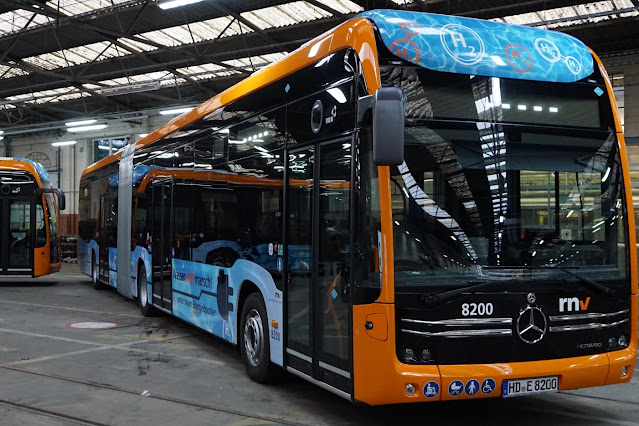
Mercedes-Benz has recently delivered the first three of 48 fully electric eCitaro articulated buses with a 60 kW fuel cell as a range extender to Rhein-Neckar-Verkehr GmbH (rnv), a public transport operator in the Rhine-Neckar region of Germany. These buses are the world’s first series-production vehicles of their kind, and they offer a range of up to 400 kilometers on one charge, making them ideal for urban traffic in Mannheim and Heidelberg. What are the benefits of fuel cell buses? Fuel cell buses use hydrogen as an alternative fuel to electricity, which can be generated from renewable sources such as water electrolysis. Unlike battery-electric buses, which need to be recharged at charging stations, fuel cell buses can refuel at hydrogen stations, which are more widely available and convenient. Fuel cell buses also have a longer range than battery-electric buses, which means they can cover more distances without stopping. Fuel cell buses have several advantages over battery-el...